I keep coming back to Cincinnati’s folk history because folk music here has never been a museum piece. It has been a living system: songs moved by immigrants, river traffic, neighborhood memory, church basements, campus coffeehouses, festivals, and the steady work of people who cared enough to keep listening. That is the useful story. Not a tidy timeline. A working one.
When readers look up the history of folk music in Cincinnati, they usually want the same four things: where the music came from, who kept it alive, how the city shaped it, and what survived into the present. That is a sensible list. Folk history gets vague fast if nobody anchors it to places and people. If you want a broader frame for the genre itself, the Library of Congress American Folklife Center and Britannica’s overview of folk music are both useful reference points.
Cincinnati is a good city for this subject because it sits in more than one cultural current at once. River city. Midwest city. Border city. Transit city. That mix gave local folk music an unusually practical shape: songs had to travel well, mean something on first listen, and survive being sung in rooms where people were also trying to talk, eat, and finish a meeting before the janitor locked the door. For more about the site behind this series, see About Cincinnati Folk Life.
By the time you finish this article, you should have a clear sense of how Cincinnati’s folk scene grew, why certain organizations mattered so much, and why the city’s current roots and Americana life still feels connected to its older traditions.
What Folk Music Means
Before we start assigning neighborhoods to centuries, it helps to define the term. Folk music is not one neat genre with a single sound. It is a family of songs and styles that tends to come from ordinary life: work, migration, worship, protest, memory, jokes, courtship, loss, and the kinds of stories people keep singing because the stories still work. That is also why folk music keeps reappearing under other names. One decade calls it old-time. Another calls it roots. Another calls it Americana, as if rebranding a family heirloom solves the filing problem.
In practice, the Cincinnati story touches several related forms:
| Term | What it usually means | Why it matters in Cincinnati |
|---|---|---|
| Folk | Community-based songs passed along by memory, performance, and reuse | Fits a city where songs moved through churches, neighborhoods, and public gatherings |
| Old-time | Dance tunes, ballads, and string-band traditions with deep regional roots | Connects the city to Appalachian and river-region traditions |
| Bluegrass | Virtuosic acoustic ensemble music built from older mountain and string-band forms | Shows up naturally in a region with strong cross-state musical exchange |
| Celtic | Irish, Scottish, and broader Celtic-influenced traditions | Matches Cincinnati’s strong heritage-festival culture |
| Americana | A modern umbrella term for acoustic roots music | Describes how younger artists keep older forms legible to new audiences |
The trick is not to treat those labels as walls. In real life, they blur together. A Cincinnati singer can sound like old-time on one song, bluesy on the next, and perfectly modern on the third. The scene has always been more practical than the marketing departments would prefer.
How Cincinnati Built Its Folk Memory
Cincinnati’s folk history did not begin with a single concert poster or one famous local singer. It began the ordinary way: people arrived with songs, then taught them to the next person. The city drew on migration, labor, worship, and neighborhood life. German immigrant communities brought choral and instrumental traditions. Appalachian migrants carried ballads, fiddle tunes, and string-band styles north. Black Cincinnati contributed spirituals, gospel, blues influence, and the deep urban rhythm that runs through almost every American music story if you listen long enough. River trade kept the city connected to other musical centers, which is a polite way of saying songs did what songs always do: they traveled.
That mixture made Cincinnati receptive to folk music before the word became a brand. People sang in churches, at social clubs, in union halls, on porches, in back rooms, and at public events where the audience was not necessarily there for the acoustics. The city’s musical culture had enough depth to support classical institutions and enough informality to keep a living roots scene healthy. That combination matters. Cities that overinvest in prestige sometimes forget the part where people are supposed to actually use the music.
By the mid-20th century, Cincinnati was well positioned for the folk revival. College students, local enthusiasts, and traveling performers found audiences in small rooms where the distance between performer and listener was short enough to count as social interaction. Coffeehouses, churches, school auditoriums, and community centers became part of the infrastructure. Folk music worked well in those spaces because it asks for attention rather than spectacle. A good song can survive a folding chair.
One important thing to remember is that folk music history is often preserved through institutions as much as through performers. In Cincinnati, that meant organizations, volunteers, presenters, and members who understood that a scene needs a calendar, a mailing list, a stage, and somebody willing to answer the phone. The romance is nice. The operations are what keep the romance from vanishing.
If you want a local paper trail, the Cincinnati History Library & Archives preserves photographs, manuscripts, and regional records, while Friends of Music Hall’s history page maps the city’s flagship concert venue across decades of performance, preservation, and reinvention.
The Key People Who Kept the Scene Moving
When people ask for the “key figures” in Cincinnati folk history, they often expect a neat list of stars. The real answer is messier and, frankly, more useful. The scene depended on several overlapping kinds of people: presenters, collectors, singers, players, organizers, and volunteers. The names change over time, but the job description stays annoying in the same ways. Someone has to book the room, remember the sound check, print the flyers, and make sure the coffee is still hot.
Cincinnati Folk Life and the volunteer presenters
One of the clearest examples is Cincinnati Folk Life itself. The historical organization described itself as a member-supported nonprofit arts group that sponsored concerts by nationally and internationally known musicians while supporting local folk music groups. That matters because presenting music is not the same as merely liking it. Presenting music creates a public place for it. It tells the city that this tradition deserves more than a nostalgic shrug.
The volunteers behind a group like that are historical figures even when they never become public legends. They build continuity. They keep a scene from depending entirely on a single charismatic performer, which is a risky business model in any era. If the concerts happened regularly, if local musicians had a place to play, if listeners knew there would be another event next season, then the scene had structure. Structure is underrated in music history until it disappears.
Queen City Balladeers and the revival generation
The Queen City Balladeers’ about page notes that the group emerged in the 1960s, at the height of the folk revival, and it still treats the tradition as roots and Americana rather than a fossil display. That is exactly the right instinct. Folk revival groups mattered because they kept older songs in circulation while making room for new players to learn, listen, and join in. A tradition survives when it stays social.
If you think of folk music as a relay, the Queen City Balladeers represent one of the handoffs. Not the beginning of the race, and not the end. Just a generation that decided the songs were still worth carrying. That is less glamorous than myth-making, but it is how scenes actually last.
Festival organizers and the public stage
Cincinnati’s festival culture also played a part. The recovered history of Cincinnati Folk Life points to the Cincinnati Celtic World Festival at Coney Island, and that detail is revealing. It shows that folk music in Cincinnati was never just one thing. It included Celtic traditions, regional memory, and a civic appetite for public celebration. Festivals create entry points. They let casual listeners encounter the music without first learning the family tree of the banjo.
Festival organizers are easy to overlook because their work is invisible when things go right. But history is full of arts scenes that faded because nobody handled the unglamorous details. A good festival is a temporary city of its own: schedule, vendors, sound, volunteers, weather, parking, nerves. If you can hold that together, you can keep a folk tradition legible to the next generation.
A Quick Timeline of the Cincinnati Folk Scene
Here is the short version of the city’s folk-music arc. Not every decade is equally documented, and not every part of the story is equally famous, but the shape is clear enough.
| Era | What changed | What it meant locally |
|---|---|---|
| 19th century | Immigrant and regional song traditions entered the city through settlement and trade | Folk music lived in neighborhoods, churches, and public gathering places rather than on formal stages |
| Early 20th century | Recording, radio, and organized performance changed how songs circulated | Cincinnati listeners had more access to outside styles, and local musicians had more examples to borrow from |
| 1940s-1960s | The national folk revival made acoustic roots music newly visible | Coffeehouses, campuses, and community rooms became important local stages |
| 1960s-1980s | Local organizations formalized the scene | Groups like Cincinnati Folk Life and revival-era circles gave the music continuity |
| 1990s-present | Roots music widened into Americana, Celtic, bluegrass, singer-songwriter, and hybrid forms | The scene became more diverse, but still depended on the same network of venues, volunteers, and audiences |
That timeline hides a lot of detail, but it gets the point across: Cincinnati folk music did not move in a straight line. It accumulated layers. A city like this rarely throws away a song if the song still gets people through the room.
Local Culture And The Shape Of The Music
Cincinnati’s local culture influenced its folk music in at least four ways. First, the city’s immigration history gave it a durable respect for inherited tradition. Second, its position along the Ohio River made it porous; songs and musicians could drift in from other regions and settle. Third, the city’s religious and civic life created many places for community singing. Fourth, the arts ecosystem gave folk music some room to coexist with choral, classical, black music, and later rock and indie scenes. That coexistence matters. Folk music is strongest when it is not forced to justify itself as the only thing happening in town.
The city’s festivals also reinforced the habit of public participation. Cincinnati has long understood how to turn heritage into an event without sanding off all the texture. That includes Celtic celebrations, neighborhood gatherings, and the broader culture of music days, street events, and seasonal programming. A folk song is easier to keep alive when it has a stage. It is easier still when it has an audience that already expects to sing along on the chorus.
There is also a quieter cultural influence: Cincinnati likes institutions, but it also likes local loyalty. That combination can be a gift to folk music. Tradition needs memory, but it also needs a reason to show up next month. Community groups, membership organizations, and volunteer-run events supply that reason. They are the boring engine under the hood. Boring engines are often the reason the car starts.
What Modern Cincinnati Folk Looks Like
Today’s Cincinnati folk scene does not look like a black-and-white photograph. It looks like a working ecosystem. Older listeners still value traditional ballads, string-band tunes, and acoustic concerts. Younger players mix those sounds with indie songwriting, Americana production, bluegrass technique, and Celtic instrumentation. Some artists play in historic rooms. Some play house concerts. Some build a following online before they ever play a formal festival. The form changes. The social function stays recognizable.
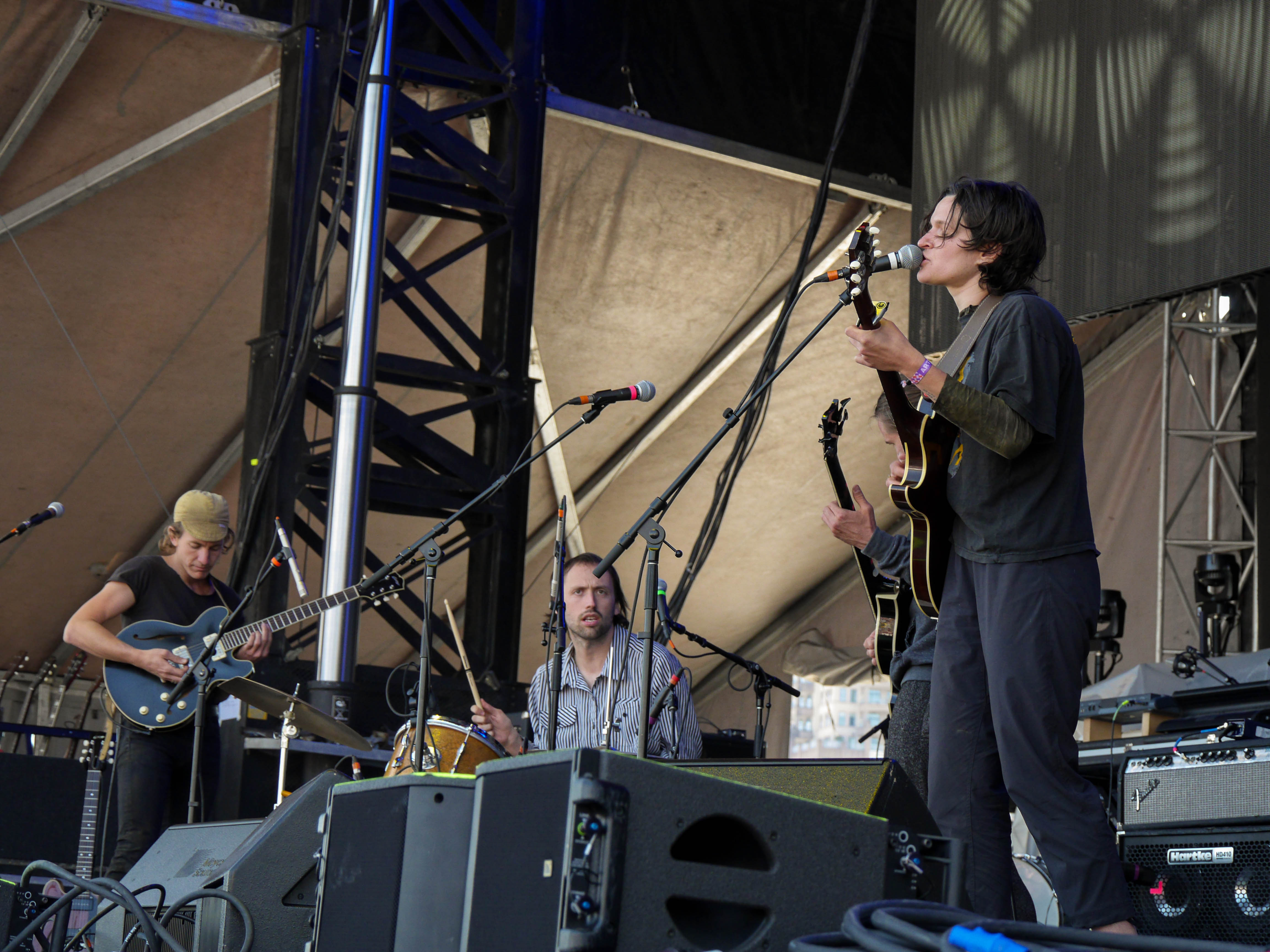
That modern mix is healthy. Folk music becomes brittle when it tries to freeze itself in one decade. The Cincinnati scene has generally avoided that trap by staying open to migration, reinterpretation, and local cross-pollination. One set on a bill might lean toward archival ballads. The next might sound like a front-porch set that learned how to use reverb. Nobody is harmed by this unless they were counting on the genre to sit still and pose.
The digital layer matters too. A modern folk musician needs more than a good set list. They need a calendar that syncs, a list of venues, a way to handle volunteer shifts, and a system for memberships, tickets, or mailing lists. Small arts groups rarely collapse because of art. They collapse because of admin debt. For that kind of work, a web app generator can be a practical way to prototype a lightweight internal tool for bookings, contact lists, and event tracking without turning the whole operation into a six-month software pilgrimage.
That may sound like a side note, but it is part of the real story. Folk scenes survive when the people behind them can keep track of the work. A spreadsheet is fine until it becomes six spreadsheets and a sticky note with a deadline. Then you need a system, not a prayer.
Why The History Still Matters
It is tempting to treat folk history as background information, useful for nostalgia and not much else. That would be lazy. The history matters because it explains why the scene still feels durable. Cincinnati folk music has survived by adapting without losing its core habits: local participation, live performance, community memory, and a respect for songs that travel well between generations. That is a useful model for any arts community.
It also matters because the city’s current music culture is easier to understand once you know where the roots run. A lot of contemporary roots and Americana acts are not trying to invent a new tradition from scratch. They are trying to keep an older one flexible enough to remain honest. That requires skill, taste, and a willingness to ignore the occasional demand for a neater category. Categories are tidy. Music is not.
The preservation instinct is part of the same story. The vintage image in this article is not from Cincinnati, but it captures an important truth about folk music everywhere: somebody has to decide that the song, the session, the field recording, or the community performance is worth keeping. Once that decision exists, a scene can keep building on it. Without it, the music becomes folklore in the weakest sense, which is to say: something people vaguely remember was once important.
What The Future Probably Looks Like
The future of folk music in Cincinnati is likely to be less dramatic than people hope and more resilient than people expect. The drama comes from new technology, changing venues, and shifting audience habits. The resilience comes from the same place it always has: people still enjoy acoustic instruments, collective singing, and stories they can understand without a decoder ring.
Expect more hybrid bills. More regional collaboration. More crossover between folk, bluegrass, Celtic music, roots rock, and singer-songwriter circles. Expect older institutions to keep archiving and presenting while newer artists build their own micro-scenes online. Expect some venues to disappear, because venues are mortal and rent is not sentimental. Expect new ones to appear, because the city still has enough listeners to make a room worth opening.
If Cincinnati’s past is any clue, the next chapter will come from the same ingredients as the previous ones: a few strong players, a few patient organizers, a public that keeps showing up, and enough volunteer labor to keep the wheels from coming off. That is not a poetic answer, but it is a true one.
Conclusion
The history of folk music in Cincinnati is a story of movement and memory. Songs arrived with migrants, settled into neighborhoods, were reshaped by revival-era interest, and then found new life through organizations, festivals, and contemporary artists. The scene has never depended on one exact sound. It has depended on a culture that knows how to listen, borrow, preserve, and perform.
That is why Cincinnati’s folk story still feels alive. The city did not merely host folk music. It built conditions for it: community spaces, supporting organizations, audience habits, and a willingness to treat local music as something worth repeating. A surprisingly serious amount of history is hidden inside that apparently simple habit.
If you want to keep exploring, the best next step is to follow the living parts of the scene: local organizations, performers, and community events. You can also reach out through the Contact Us page if you have a memory, poster, program, or story that belongs in the archive of the city’s musical life.
Key takeaways:
- Cincinnati’s folk music history grew from migration, river exchange, and neighborhood culture.
- Volunteer presenters and organizations such as Cincinnati Folk Life helped give the music a public home.
- Revival-era groups like Queen City Balladeers kept older songs in circulation and helped define the local roots scene.
- Festivals and community events made folk music visible to people who were not already self-described folk fans.
- Modern Cincinnati folk continues to evolve through Americana, bluegrass, Celtic music, singer-songwriters, and better-organized event systems.