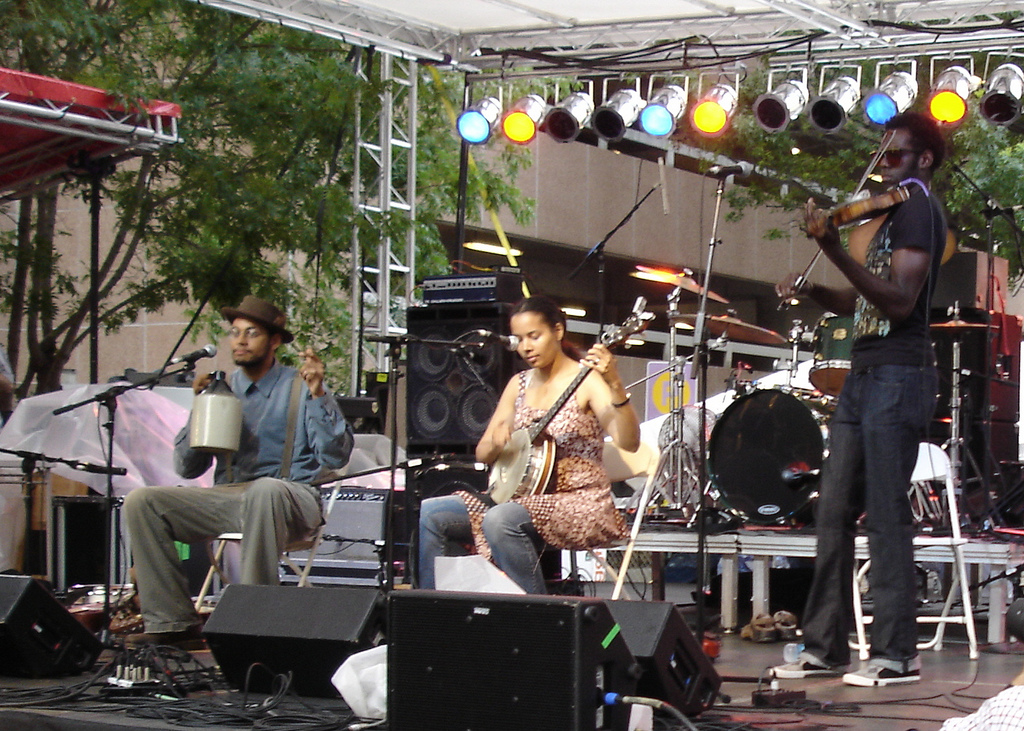
Folk music is built to travel by voice and hand—yet today’s audiences are showing up through screens. That shift has changed how songs are discovered, how communities stay connected, and how artists sustain their work.
When folk musicians (and the people who support them) search for guidance, these questions usually come up: What’s actually harder online? Where can digital help? How do I reach listeners without losing the community feel? As musician and scholar Ruth Finnegan observed, “music is a social practice,” not just content—so the medium matters. https://en.wikipedia.org/wiki/Ruth_Finnegan?utm_source=cincinnatifolklife.com
Research and industry guidance consistently point to two realities: attention is fragmented across platforms, and creators now need to treat distribution as part of the craft. For a clear overview of the modern creator economy and audience behavior, see Pew Research Center and its reporting on technology and media habits for example social media and news (context for discovery and attention). https://www.pewresearch.org/internet/?utm_source=cincinnatifolklife.com/2016/10/04/social-media-and-news/?utm_source=cincinnatifolklife.com
In this article, you’ll learn the most common challenges folk musicians face online, the opportunities that digital tools unlock, and a practical way to decide what to focus on next—without burning out.
Table of contents
- Introduction to the digital age
- Challenges faced by folk musicians
- Opportunities for growth and exposure
- Conclusion
Introduction to the digital age
Digital doesn’t replace folk traditions; it changes the route they take to reach new listeners. Historically, discovery happened through local scenes: a neighboring show, a community newsletter, a radio segment, a friend who knew a friend. Today, discovery can start with a clip, a playlist recommendation, or a search result.
That shift creates a new baseline: even artists who play small venues are now competing for attention in a global feed. The good news is that the same tools that crowd your focus can also help you build a reachable audience—one that feels connected, not just counted.
Challenges faced by folk musicians
1) Discoverability is harder than it looks
Posting music is not the same thing as being found. Algorithms and platform design influence what gets surfaced, and that can be unpredictable—especially if you rely on a single channel.
- Failure mode: releasing great material, but learning too late that your audience can’t reach it.
- Consequence: you spend time performing and recording, but your growth plateaus.
For practical guidance on how search and discovery work, the fundamentals of Google Search documentation can help frame expectations around indexing, relevance, and content quality. https://developers.google.com/search/docs?utm_source=cincinnatifolklife.com
2) Platform consistency vs. folk authenticity
Many musicians feel pressure to constantly adapt their sound and presentation to match what performs well online. But folk audiences often value sincerity, context, and storytelling—the “why” behind a tune.
Risk-aware approach: adapt distribution, not identity. Consider formats that carry context (short performance plus a story, a rehearsal clip plus a note about tradition, a live session plus audience interaction).
3) Income volatility and the “visibility tax”
Digital can broaden reach, but it can also increase workload. If every platform demands new content, your calendar becomes a treadmill. Streaming revenue alone may not replace live performance income for many artists.
Plan for this as a budget issue, not a motivation issue: decide what portion of your time is for creation, what portion is for publishing, and what portion is for community.
4) Community fragmentation
Folk is social by design: it’s built on shared spaces and shared rhythms. Online, those spaces can fracture across groups, links, and platforms that don’t talk to each other.
- Failure mode: your community is scattered, so announcements don’t land.
- Consequence: show turnout and engagement drop, even if your views are steady.
A durable countermeasure is to maintain at least one “home base” where your audience can find you reliably (your website and mailing list are the usual options).
5) Rights, reuse, and attribution headaches
Digital sharing is powerful, but it also raises questions: Who posted what? Who can reuse it? What happens when clips get re-uploaded?
For a high-level reference point on copyright basics, you can start with U.S. Copyright Office guidance. https://www.copyright.gov/?utm_source=cincinnatifolklife.com (Use it to frame what to document, and what to clarify before you publish.)
Opportunities for growth and exposure
1) Turn performance into a repeatable discovery system
Instead of one-off uploads, build a simple publishing cadence around your live work. A practical model:
- Before: tease the show or session with a short clip and a clear date.
- During: capture a few “anchor” moments (opening tune, crowd response, a story beat).
- After: post a recap plus links to your next appearances and relevant recordings.
This converts one performance into multiple discovery touchpoints without turning every day into content production.
2) Niche credibility is a superpower
Folk music is full of specialties: region, instrument traditions, cultural lineages, and specific repertoire. Digital search and long-tail platforms can reward that specificity.
Example: A group that records a short explanation of a tune’s background (where it comes from, what to listen for, how it’s traditionally played) can perform better than a release that only lists the track names.
3) Collaborations scale community
Crossovers—between folk subgenres, between generations, and between local and touring artists—often work well online because they create shared audiences.
If you’ve been thinking about collaboration, consider starting with:
| Collab type | Why it works digitally | Low-risk first step |
|---|---|---|
| Guest instrumental feature | Easy to share, easy to tag | One track on a release or a live session |
| Story swap (songs with context) | People share “knowledge,” not just audio | Short video or blog-style companion post |
| Community open mic | Builds repeat engagement | Monthly livestream with local partners |
4) Use digital tools to reduce admin load
When the “business of music” expands—booking, emails, scheduling, posting—it can swallow creative time. Streamlining workflows can free energy for rehearsals and writing.
For ideas about integrating AI into content and business workflows, a neutral reference is https://flatlogic.com/services/ai-integration-services?utm_source=cincinnatifolklife.com.
5) Keep a reliable path back to your core
Digital reach is temporary; relationships last longer. Make sure every platform link points somewhere stable: your website for dates, releases, and context, and a way to receive updates.
For organization and contact options, you can use the site’s About Cincinnati Folk Life page as a community touchpoint, and route direct questions through Contact Us.
Conclusion
Folk music in the digital age is a trade: more pathways to discovery in exchange for more ways to get lost. The core advantage is that folk stories travel well—when you pair recordings and performances with context, consistency, and a home base for your community.
Next steps checklist:
- Pick your primary channels and keep them consistent for 4–6 weeks.
- Publish around your live moments (before/during/after).
- Document rights and attribution once—then reuse your template.
- Maintain at least one reliable place for updates and contact.
If you’re shaping a plan for what to do next, start by verifying your current setup and deciding on one recovery path if something breaks—then iterate. If you’d like help aligning your online presence with your community goals, use Contact Us.